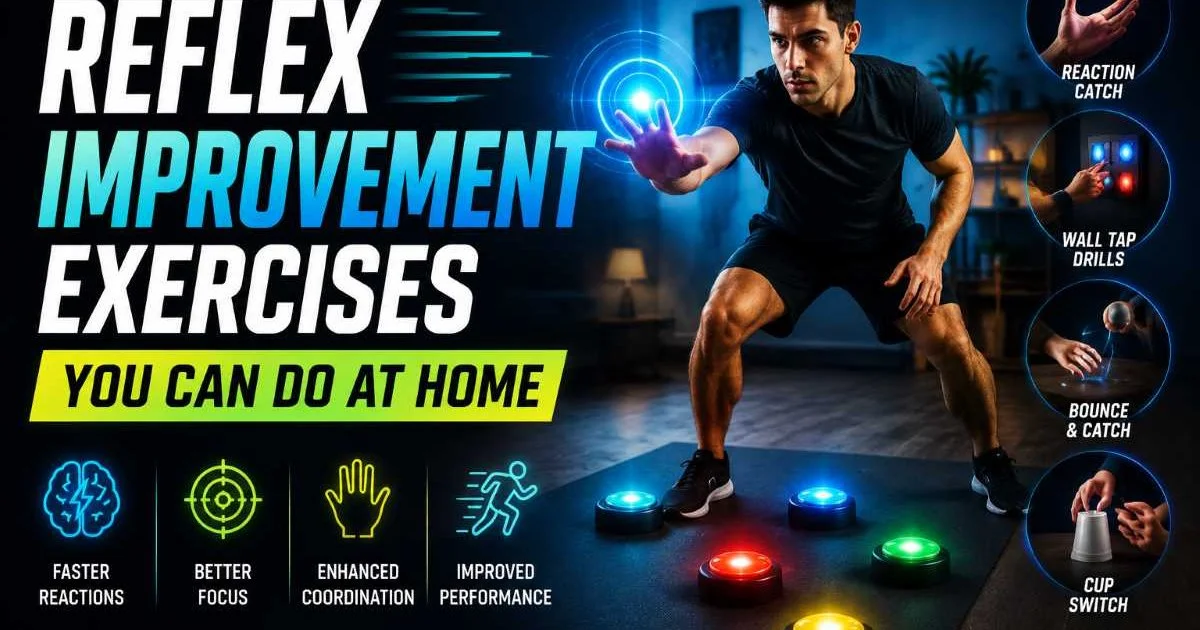
Improvement exercises designed to sharpen your reflexes don't require a gym membership, expensive equipment, or even a lot of space. Whether you're a casual gamer looking to react faster during gameplay or a fitness beginner trying to build better body awareness, training your reflexes at home is entirely achievable.
Reflexes are your body's automatic responses to stimuli, and like any physical skill, they can be trained and improved over time. The good news is that most reflex training overlaps with hand coordination, finger dexterity, and reaction speed, all of which translate directly into better performance in games and daily tasks.
Understanding what hand motion gaming is and how it works gives you a solid foundation for why these exercises matter. This guide walks you through practical, numbered steps you can start today, right from your living room or desk.
Key Takeaways
- Reflex training at home requires no equipment and only 15 to 20 minutes daily.
- Hand and finger dexterity drills directly improve gaming reaction times.
- Consistent practice beats intensity; daily short sessions outperform weekly long ones.
- Combining physical exercises with digital tools accelerates reflex development significantly.
- Tracking your progress with simple metrics keeps you motivated and accountable.
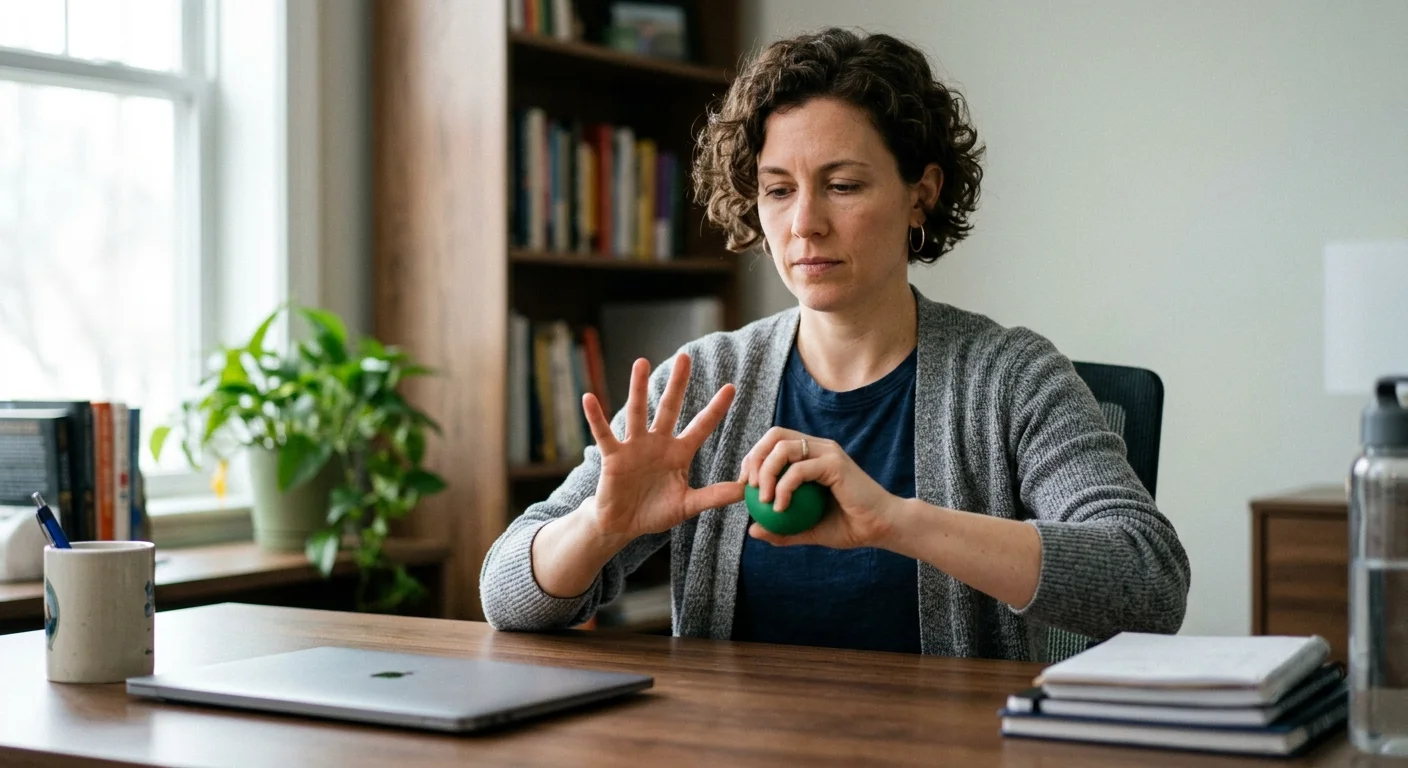
Step 1: Warm Up Your Hands and Fingers
Finger Spread and Squeeze
Every effective reflex session starts with a proper warm-up. Cold muscles and stiff joints respond sluggishly, which defeats the purpose of training. Begin by spreading all ten fingers as wide as possible, holding for three seconds, then squeezing them into tight fists. Repeat this cycle ten times. This simple movement increases blood flow to your hands and primes the tendons for faster, more precise actions.
Next, try individual finger taps. Place both hands flat on a table and lift each finger one at a time, starting with your pinky and moving to your thumb. The goal is isolation; you want each finger to move independently without dragging its neighbors along. This builds the neural pathways that govern fine motor control, which is the foundation of all reflex improvement exercises for your hands.
If your fingers feel stiff in the morning, soak them in warm water for two minutes before starting your warm-up routine.
Wrist Circles and Stretches
After finger work, move to your wrists. Rotate each wrist slowly in circles, ten times clockwise and ten times counterclockwise. Then extend one arm forward, palm facing up, and gently pull your fingers back toward your body with the other hand. Hold for fifteen seconds per side. These stretches prevent repetitive strain injuries, which are common among gamers and people who work at keyboards all day.
The warm-up phase should take about three to five minutes. It might feel unnecessary, but skipping it is the fastest way to plateau or get hurt. If you want a more structured approach to hand preparation, exploring hand motion coordination exercises for all ages provides a broader set of warm-up routines suitable for any skill level.
Step 2: Practice Reaction Speed Drills
The Coin Drop Test
Reaction speed is the measurable side of reflexes, and it responds well to targeted drills. The coin drop test is a classic. Hold a coin at shoulder height between your thumb and index finger. Release it and try to catch it with your other hand before it falls past your waist. Start with a larger coin and progress to smaller ones as you improve. This drill trains your eyes and hands to work together under time pressure.
Practice this ten times with each hand per session. Keep a mental note (or a written one) of your success rate. Most beginners catch the coin about four out of ten times. Within two weeks of daily practice, that number typically climbs to seven or eight. The improvement exercises here target the gap between perception and action, which is exactly what reflexes are.
Wall Ball Bounce
If you have a tennis ball or rubber ball, stand about three feet from a wall and throw it against the surface with one hand. Catch it with the other. Vary the speed and angle to keep your brain guessing. This is an outstanding reflex drill because it introduces unpredictability, which forces your nervous system to adapt in real time rather than relying on memorized patterns.
For an extra challenge, try bouncing the ball off the floor before it hits the wall, or use two balls simultaneously. The wall ball bounce is especially useful for casual gamers because it mimics the type of rapid visual tracking you need in fast-paced games. You can also explore top hand coordination games to boost reflexes fast for digital alternatives that train similar skills.
"Reflexes aren't fixed at birth; they're skills that respond to consistent, targeted practice just like strength or endurance."
Step 3: Build Coordination With Guided Exercises
Mirror Hand Movement Drill
Coordination is the bridge between raw reaction speed and useful reflexes. One effective method is the mirror drill. Sit facing a partner (or a mirror if solo) and have them perform random hand gestures: fist, open palm, peace sign, thumbs up. Your job is to mirror the gesture as quickly as possible. When practicing alone, use a mirror and alternate between leading with your dominant and non-dominant hand to build bilateral coordination.
This exercise is deceptively challenging. Your brain must identify the gesture, reverse it (since you're mirroring), and execute the movement, all within a fraction of a second. Start slowly and increase speed as accuracy improves. Aim for three-minute rounds with thirty-second rest periods. Over time, this drill noticeably improves how quickly your hands respond to visual cues, a skill that transfers directly to gaming and daily tasks alike.
If you're practicing with a mirror, position it at arm's length to reduce visual delay and make the drill more effective.
Digital Coordination Training
Physical drills are powerful, but combining them with digital tools creates a well-rounded training program. Hand Play AI Agent, for example, offers guided hand motion challenges that respond to your movements in real time. These tools track your accuracy and speed, giving you instant feedback that purely physical exercises can't provide. The digital component adds variety, which helps maintain motivation during longer training periods.
Learning how to improve hand coordination with targeted exercises gives you a structured roadmap for pairing physical and digital training. Similarly, tools built around smart design principles, like AI-powered design applications, show how technology can guide users through complex tasks step by step. The same logic applies to reflex training: guided practice with real-time feedback consistently outperforms unstructured repetition.
| Day | Exercise | Duration | Focus Area |
|---|---|---|---|
| Monday | Finger taps and coin drop | 15 min | Fine motor speed |
| Tuesday | Wall ball bounce | 15 min | Hand-eye tracking |
| Wednesday | Mirror drill | 15 min | Bilateral coordination |
| Thursday | Digital hand motion games | 20 min | Reaction accuracy |
| Friday | Combined drills (mix any two) | 20 min | General reflex speed |
| Saturday | Free play and experimentation | 15 min | Creativity and fun |
| Sunday | Rest or light stretching | 10 min | Recovery |
Rotate exercises every two weeks to prevent your brain from adapting too completely and stalling progress.
Step 4: Track Progress and Increase Difficulty
Simple Metrics to Record
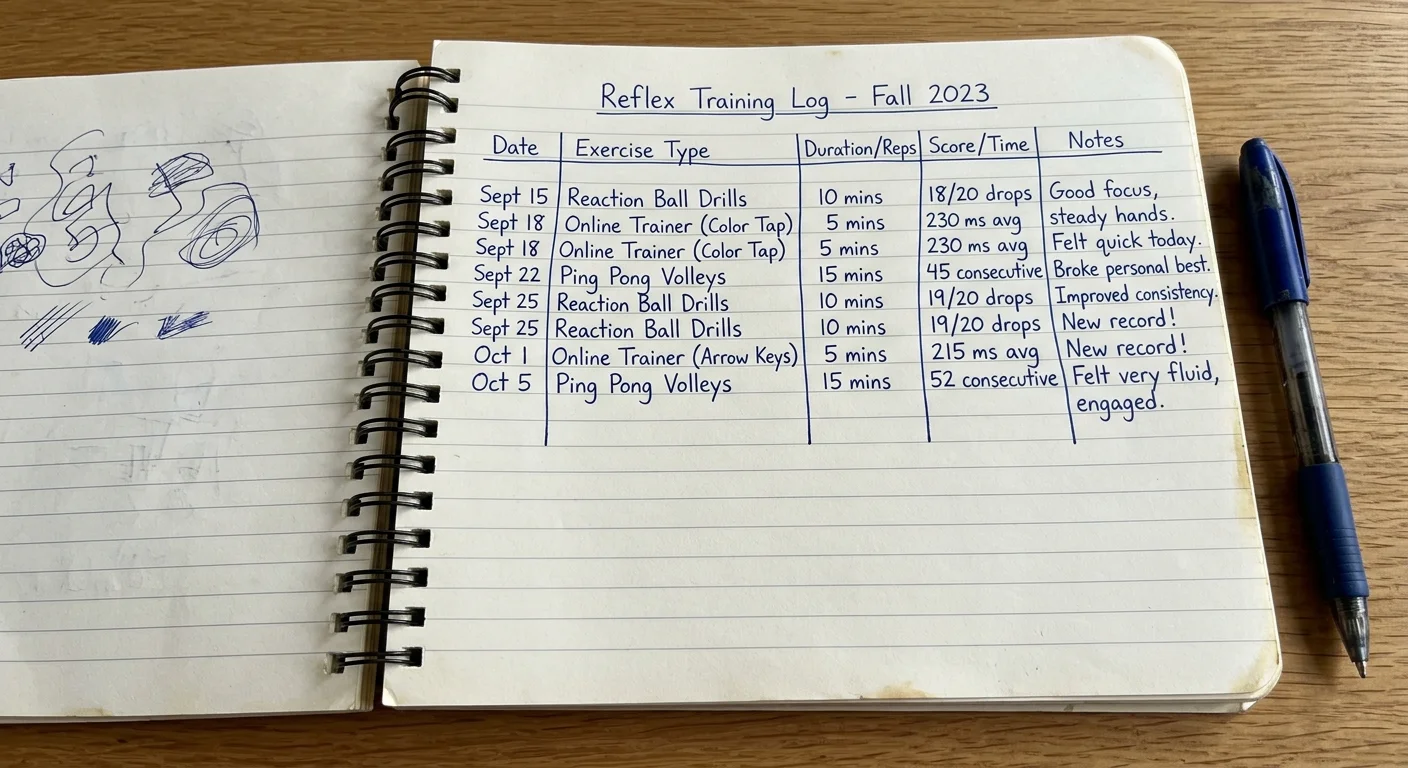
What gets measured gets improved. You don't need fancy software to track your reflex gains. A simple notebook or phone note works perfectly. Record three things after each session: the exercise performed, the number of successful repetitions, and a subjective difficulty rating from one to five. Over weeks, patterns emerge. You'll see which improvement exercises produce the fastest gains and which ones have plateaued, signaling it's time to increase difficulty.
Online reaction time tests are another useful benchmark. Several free websites measure your click reaction time in milliseconds. Test yourself once a week under the same conditions (same time of day, same hand, same device) to get consistent data. The average person reacts in about 250 milliseconds to a visual stimulus. Dedicated training can bring that number below 200 milliseconds, which gives you a measurable, motivating target to chase.
Scaling the Challenge
Progression is non-negotiable. Your nervous system adapts to repeated stimuli, so the same drill at the same difficulty will eventually stop producing results. Every two weeks, increase the challenge. For the coin drop, switch to a smaller coin. For the wall ball, step back an extra foot or use a smaller ball. For digital games, raise the speed setting or switch to a mode with more simultaneous targets.
Another effective way to scale is by adding cognitive load. Count backward from one hundred by sevens while performing your drills. Or play music and try to catch the ball only on the beat. These additions force your brain to multitask, which builds the kind of reflexes that hold up under pressure, exactly what you need during intense gaming sessions or any situation demanding fast, accurate hand movements.
Also Check: What Is Website Security Scanning? A Complete Guide
Don't increase difficulty too quickly. Jumping ahead before mastering the current level can lead to frustration and inconsistent form.
Frequently Asked Questions
?How do I make the coin drop test harder as I improve?
?Are digital coordination tools better than the wall ball bounce drill?
?Will 15 minutes daily really make a noticeable difference in reflexes?
?Can I skip the finger warm-up if my hands already feel loose?
Final Thoughts
Building faster reflexes at home is a straightforward process when you follow a structured plan. Start with proper warm-ups, work through targeted reaction and coordination drills, use digital tools for feedback, and track everything.
The improvement exercises outlined in this guide require nothing more than a few household items, a bit of open space, and fifteen to twenty minutes of your day. Consistency will always beat intensity here. Stick with the schedule, scale the difficulty, and you'll notice real changes in your reaction time within just a few weeks.