Hand motion coordination exercises are structured activities designed to improve the speed, accuracy, and fluidity of hand and finger movements through repetitive, guided practice. Whether you are a casual gamer looking to sharpen your reflexes or a fitness beginner searching for a fun way to build dexterity, these exercises offer a surprisingly effective training method.
The concept has gained traction in recent years thanks to interactive apps and platforms that turn practice into play. Instead of boring drills, you get real time movement practice wrapped in engaging challenges. Hand Play AI Agent, for example, brings this idea to life by letting users practice moves, improve coordination, follow guided gameplay, learn tricks, and enjoy smart hand motion challenges in real time. The stakes are higher than you might think: poor hand coordination affects everything from typing speed to athletic performance.
Understanding what these exercises are, and how they work, is the first step toward meaningful improvement.
Key Takeaways
- Hand motion coordination exercises train your brain and hands to work together more efficiently.
- Guided gameplay tricks make repetitive practice feel like an engaging game experience.
- Consistent daily sessions of ten to fifteen minutes produce measurable dexterity improvements.
- Real time feedback accelerates learning compared to unguided, solo practice methods.
- These exercises benefit gamers, musicians, rehabilitation patients, and general fitness beginners alike.
How Hand Motion Coordination Exercises Work
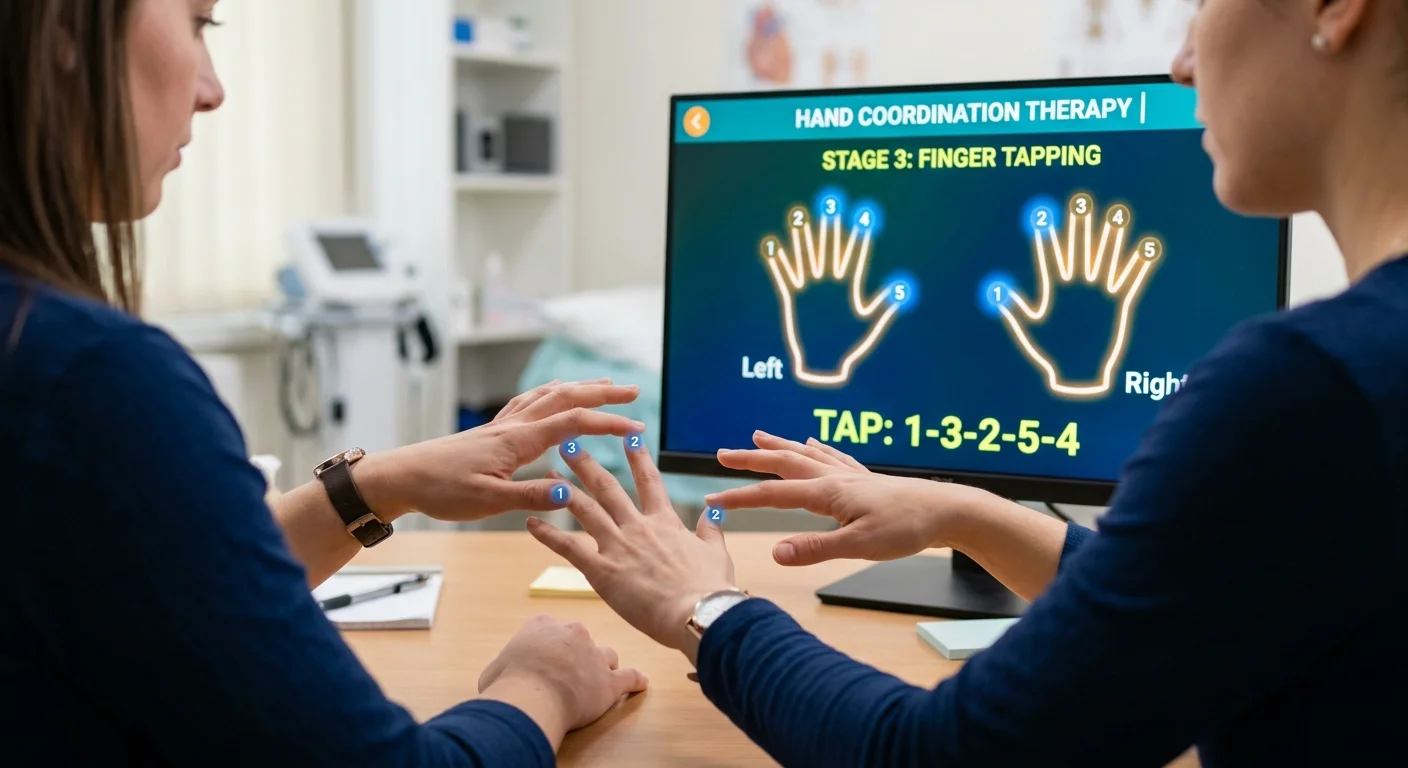
At their core, hand motion coordination exercises work by creating a feedback loop between your visual system, your brain, and your hand muscles. A prompt appears on screen, whether it is a gesture, a pattern, or a timed sequence, and you respond with the corresponding hand movement. The system then evaluates your accuracy and speed, providing instant corrections or encouragement. This loop mirrors how athletes train: observe, execute, receive feedback, and adjust. The repetition strengthens neural pathways, which is exactly how motor learning works according to decades of neuroscience research.
The Role of Real Time Feedback
Real time feedback is what separates modern coordination training games from older, static exercise programs. When you receive corrections as they happen, your brain processes the error immediately and adjusts on the next attempt. Studies on hand movement show that immediate sensory feedback dramatically improves motor skill acquisition compared to delayed feedback. This is why platforms that offer real time movement practice tend to produce faster results. Your nervous system essentially rewires itself more efficiently when the gap between action and correction is minimal.
Progressive Difficulty and Guided Gameplay
Most effective programs use progressive difficulty scaling. You start with simple motions, like opening and closing your fist in rhythm, then advance to complex sequences involving individual finger movements and multi-hand patterns. Guided gameplay tricks keep you engaged because each level introduces a new challenge that builds on what you already mastered. This is similar to how video games use difficulty curves to maintain player interest. The result is that you learn motion challenges without feeling overwhelmed, and the sense of progression keeps you coming back.
The technology behind this varies. Some apps use camera-based tracking, while others rely on touchscreen input or even wearable sensors. Regardless of the method, the principle remains the same: present a target movement, measure the response, and adapt the challenge accordingly. Hand Play AI Agent uses intelligent algorithms to personalize this progression based on your individual performance data, making every session uniquely calibrated to your skill level.
Start with five-minute sessions and build to fifteen minutes over two weeks to avoid hand fatigue and frustration.
Why They Matter and Who Benefits
The benefits of hand motion coordination exercises extend far beyond gaming. Fine motor skills are fundamental to daily life, from buttoning a shirt to operating a smartphone. For casual gamers, improved hand coordination translates directly into better reaction times and more precise inputs during gameplay. For fitness beginners, these exercises offer a low-impact entry point into body awareness training that does not require a gym membership or heavy equipment. The barrier to entry is almost nonexistent, which makes them an ideal starting point for anyone curious about physical skill development.
Beyond personal improvement, there is a professional dimension worth noting. Industries from healthcare to manufacturing increasingly value employees with strong manual dexterity. Even businesses adopting AI-driven workflows, such as those using AI platforms for handling invoices, still rely on human operators whose hand-eye coordination matters when interacting with complex interfaces. The point is that training your hands is not a niche hobby; it is a broadly applicable skill investment.
Use Cases Beyond Gaming
Musicians use hand motion coordination exercises to develop finger independence on instruments like piano and guitar. Rehabilitation patients recovering from strokes or hand injuries rely on guided exercises to rebuild motor function. Surgeons practice fine motor drills to maintain the precision required in the operating room. Even e-sports professionals dedicate time to coordination training games as part of their daily warm-up routines. The common thread across all these use cases is that targeted, repetitive hand practice produces measurable, transferable improvements.
For older adults, these exercises carry additional significance. Age-related decline in hand dexterity is well-documented, and regular practice can slow or partially reverse this process. A program that frames these drills as fun challenges rather than medical therapy tends to see higher adherence rates, which is exactly where platforms like Hand Play come in. The gamification aspect is not a gimmick; it is a scientifically supported strategy for maintaining engagement over time.
Also Check: How to Build Reusable Codebase for Faster Development
"Training your hands is not a niche hobby; it is a broadly applicable skill investment that pays off in gaming, work, and daily life."
Common Misconceptions About Coordination Training
One of the most persistent myths is that hand coordination is purely genetic and cannot be improved. This is flatly wrong. While genetics influence your baseline, research consistently shows that targeted practice produces significant gains regardless of your starting point. The brain's neuroplasticity allows it to form new connections at any age, meaning a 50-year-old beginner can still make meaningful progress. Hand motion coordination exercises are designed specifically to exploit this plasticity through structured repetition and adaptive challenge.
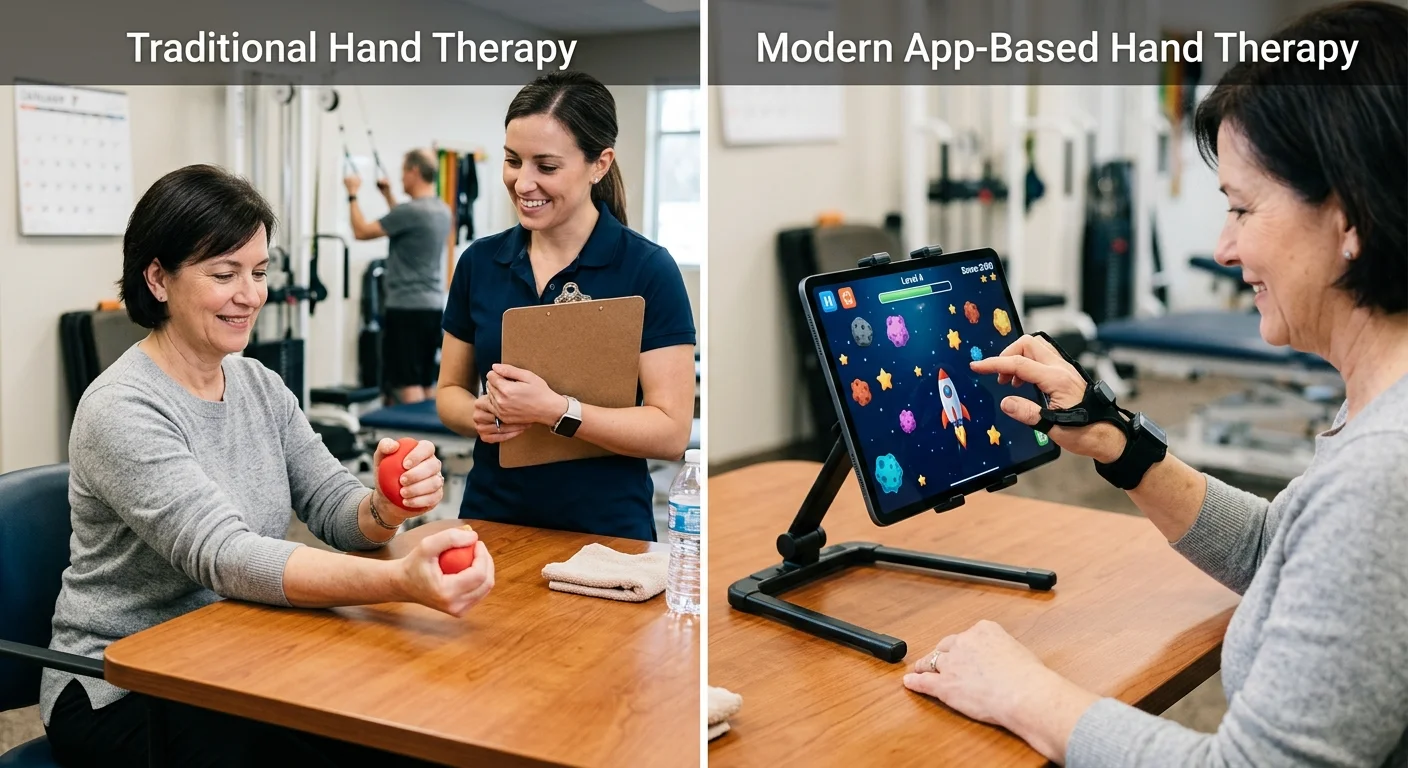
Another common misconception is that these exercises must be boring or tedious to be effective. This belief likely stems from outdated physical therapy models where patients squeezed rubber balls for thirty minutes. Modern approaches use guided gameplay tricks, dynamic challenges, and real time scoring to keep sessions engaging. If you are enjoying the process, you are more likely to practice consistently, and consistency matters more than any single session's intensity. The fun factor is functional, not frivolous.
Some people also assume that playing any video game counts as coordination training. While gaming does engage hand-eye coordination to some degree, generic gameplay is not optimized for skill development. A dedicated program isolates specific movements, tracks progress with precision, and adjusts difficulty in ways that a standard video game does not. Think of it this way: playing pickup basketball is fun exercise, but it is not the same as a structured shooting drill designed by a coach. The same distinction applies to improve hand coordination through targeted versus incidental practice.
If you experience persistent pain during hand exercises, stop immediately and consult a healthcare professional. Mild fatigue is normal; sharp pain is not.
Finally, there is a misconception that results require hours of daily practice. In reality, research on motor learning suggests that shorter, focused sessions outperform long, unfocused ones. Ten to fifteen minutes of deliberate practice, where you are actively engaged and receiving feedback, can outpace an hour of mindless repetition. This is good news for busy people. You do not need to overhaul your schedule; you just need a few concentrated minutes each day.
How Coordination Exercises Relate to Similar Concepts
Hand motion coordination exercises sit at the intersection of several related fields: physical therapy, sports training, cognitive science, and interactive gaming. They share principles with occupational therapy, which focuses on restoring functional movement after injury. They also overlap with rhythm games like Beat Saber, which challenge players to match movements to musical beats. However, the distinguishing factor is intent. Coordination exercises are designed with measurable skill development as the primary goal, not entertainment alone, though entertainment is a powerful secondary benefit.
Coordination Training Games vs. Traditional Therapy
Traditional hand therapy typically involves a therapist guiding a patient through specific exercises in a clinical setting. Coordination training games digitize this process, making it accessible from home and available on demand. The trade-off is that you lose the therapist's expert eye, but you gain frequency and convenience. For people who do not have a clinical need but want to improve hand coordination for gaming, music, or general wellness, game-based platforms fill a gap that clinical therapy was never designed to address.
Cognitive training programs like Lumosity or BrainHQ share some DNA with hand coordination exercises, but they primarily target memory, attention, and processing speed rather than physical dexterity. The physical component is what sets hand motion coordination exercises apart. You are not just thinking faster; you are moving faster and more accurately. This dual engagement of mind and body is what makes the training so effective, and it is why platforms that combine both elements tend to produce the most well-rounded results.
Do not substitute coordination games for professional rehabilitation if you have a diagnosed hand or wrist condition. Always follow your doctor's treatment plan.
The relationship to fitness is also worth exploring. While hand exercises will not replace a full-body workout, they complement broader fitness routines nicely. Many fitness beginners overlook their hands and wrists entirely, focusing on larger muscle groups. Incorporating even brief hand-focused sessions builds a more complete picture of physical capability. It is a small addition to any routine that pays disproportionate dividends in daily function, and platforms offering smart hand motion challenges make it easy to get started without any special equipment.
Frequently Asked Questions
?How long should daily sessions be to see dexterity gains?
?How does real time feedback differ from practicing moves solo?
?Are coordination training games as effective as traditional therapy?
?Will these exercises help if I already have decent hand coordination?
Final Thoughts
Hand motion coordination exercises represent a practical, accessible way for anyone to build dexterity, sharpen reflexes, and enjoy the process along the way. Whether you are a casual gamer warming up before a session, a musician developing finger independence, or simply someone who wants better control over daily tasks, these exercises deliver real results.
The combination of real time feedback, progressive challenges, and gamified design makes modern platforms far more effective than old-school drills. Start with short, focused sessions, stay consistent, and let the guided gameplay carry you forward.
Disclaimer: Portions of this content may have been generated using AI tools to enhance clarity and brevity. While reviewed by a human, independent verification is encouraged.