Hand coordination is one of those skills that quietly affects everything you do, from typing at your desk to catching a set of keys tossed your way. For casual gamers and fitness beginners, improving it can feel like an afterthought, something you assume will just get better on its own. But targeted practice makes a measurable difference.
Whether you're trying to hit faster combos in your favorite game or simply want smoother, more responsive hands, the exercises in this guide will help. The concept behind hand motion gaming shows how interactive movement challenges can accelerate this kind of development.
In the next few sections, you'll learn exactly how to train your hands with purpose, progressing from simple warm-ups to advanced coordination games that build real skill over time.
Key Takeaways
- Start every training session with a two-minute hand warm-up to prevent strain.
- Finger dexterity training builds the foundation for faster, more accurate movements.
- Coordination games offer a fun, measurable way to track your improvement.
- Consistency beats intensity; ten minutes daily outperforms one weekly hour-long session.
- Progressive difficulty is essential; stay at one level only until it feels easy.
Step 1: Warm Up Your Hands and Fingers Properly
Basic Stretches to Start
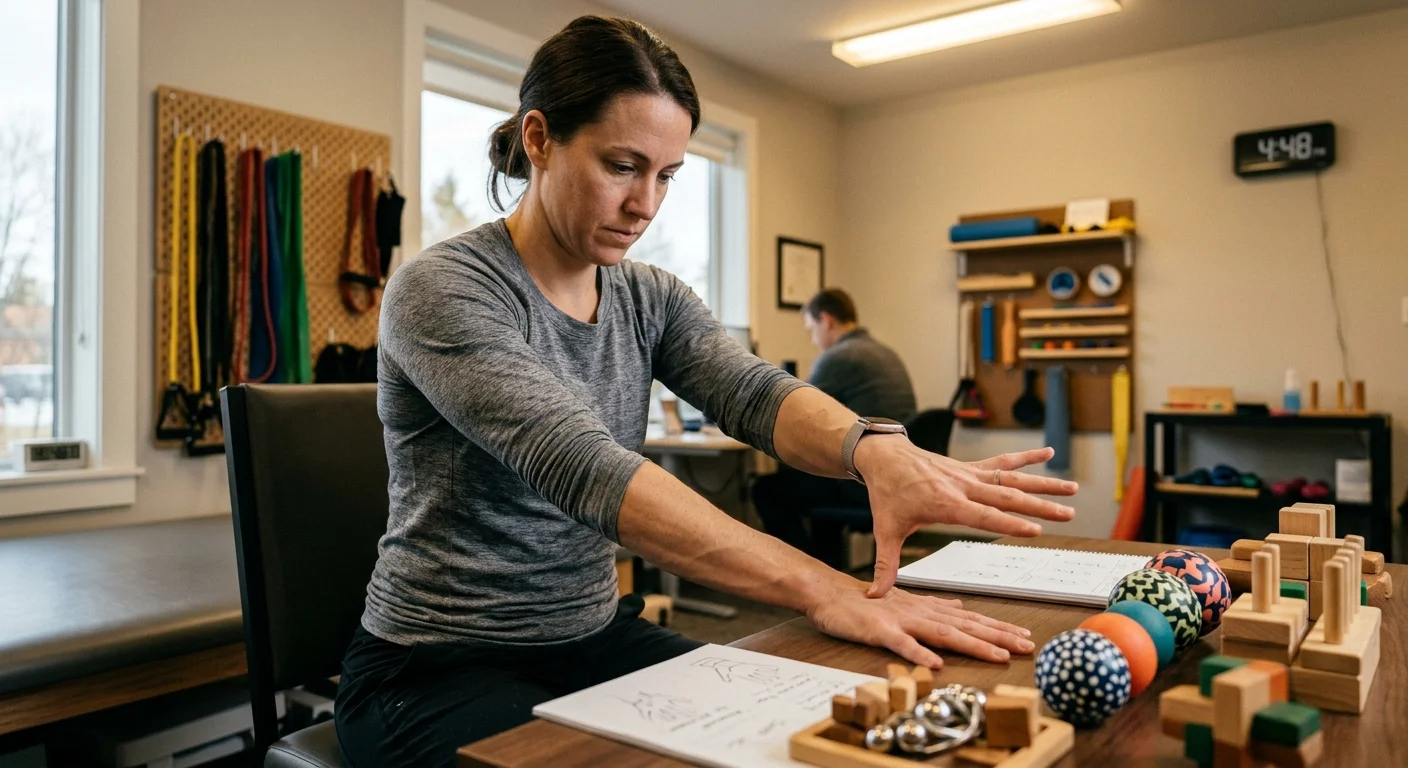
Cold muscles and tendons don't respond well to fast, precise movements. Before you jump into any motor skill drills, spend at least two minutes warming up. Extend your fingers wide, hold for five seconds, then make a tight fist. Repeat this open-close cycle ten times. It sounds almost too simple, but this basic stretch increases blood flow to the small muscles in your palm and forearm that control fine movement.
Next, do individual finger-to-thumb touches. Touch your thumb to each fingertip on the same hand, moving from index to pinky and back. Do three rounds on each hand. This activates the neural pathways responsible for independent finger control, which is the foundation of all hand coordination work you'll do later in this guide.
Do your warm-up even on days you only plan a short five-minute session. Skipping it increases injury risk significantly.
Circulation-Boosting Movements
After static stretches, add some dynamic movement. Shake your hands loosely at your sides for fifteen seconds, letting your wrists go completely limp. Then rotate each wrist slowly, five circles clockwise and five counterclockwise. These rotations loosen the carpal tunnel area and prepare your wrists for the lateral movements common in guided hand movements and gaming scenarios.
If your hands tend to feel stiff, especially first thing in the morning, try running them under warm water for thirty seconds before stretching. The heat relaxes connective tissue faster than stretching alone. Physical therapists frequently recommend this for patients recovering from repetitive strain injuries. It works just as well as a preventive measure for anyone starting a new hand training routine.
Step 2: Build Finger Dexterity With Isolation Drills
Tabletop Finger Lifts
Finger dexterity training begins with learning to move each finger independently. Place your hand flat on a table, palm down. Lift just your index finger as high as you can, hold for two seconds, then lower it. Repeat with each finger individually. Most people discover their ring finger is surprisingly weak and uncooperative. That's normal. This weakness is exactly why isolation drills matter; they target the specific fingers that lag behind.
Aim for three sets of ten lifts per finger. Over two weeks, you'll notice the height of each lift increasing and the movement feeling smoother. This drill directly translates to better gaming performance, where precise finger presses on a controller or keyboard separate good players from great ones. It also benefits daily tasks like playing a musical instrument or even opening stubborn jar lids.
If you feel sharp pain (not mild fatigue) during any finger lift, stop immediately. Pain during isolation drills can indicate tendon inflammation.
Sequential Tapping Patterns
Once individual lifts feel comfortable, graduate to sequential tapping. Tap your fingers on the table in order: index, middle, ring, pinky. Then reverse it. Start slowly, focusing on even spacing between each tap. Speed up only when the pattern is consistent. This is a form of motor skill drill that trains your brain to sequence rapid, precise actions, exactly the kind of processing needed in fast-paced coordination games.
For an added challenge, try alternating hands. Tap index-middle-ring-pinky on your left hand, then immediately do the same on your right. Advanced practitioners can run both hands simultaneously in opposite directions (left hand going index to pinky while the right goes pinky to index). This bilateral exercise forces both brain hemispheres to coordinate, and it's genuinely difficult at first. Stick with it for a week and the improvement will surprise you.
Step 3: Train Reflexes With Guided Hand Movements
Reaction-Based Catching Drills
Reflex improvement exercises don't require expensive equipment. One classic drill involves dropping a ruler. Have a partner hold a ruler vertically at the 30-centimeter mark while you position your open hand at the bottom. When they release it without warning, catch it as fast as you can. The lower you catch it, the faster your reflexes. Record your catch point each session. Average reaction time for this test is around 20 centimeters; athletes and trained gamers regularly hit below 12.
Another effective exercise uses a tennis ball. Stand about one meter from a wall and throw the ball against it with one hand, then catch it with the other. Alternate throwing hands every five catches. This trains your eyes and hands to work together under time pressure, building the same cross-body hand coordination that helps in gaming and sports. Start with soft, predictable throws and gradually increase speed and angle variation.
"Reflexes are not fixed at birth; they are trainable skills that respond to consistent, targeted practice."
Digital Reflex Training
App-based and browser-based tools offer another avenue for reflex work. Platforms that use AI-powered fitness coaching can now track your hand response times and adjust difficulty in real time. These systems analyze how quickly you react to visual or audio cues, then progressively shorten your response window. It's a method that feels more like playing than training, which is exactly why it works so well for casual gamers and beginners who struggle with motivation.
The advantage of digital reflex improvement exercises over physical ones is measurement precision. An app can tell you your average reaction time dropped from 310 milliseconds to 275 milliseconds over three weeks. That kind of specific feedback loop keeps you engaged and shows tangible evidence of your progress. Pair digital sessions with the physical drills above for the best overall results.
Also Check: Code Reuse Best Practices to Reduce Development Time
| Day | Exercise Focus | Duration | Difficulty Level |
|---|---|---|---|
| Monday | Warm-up + Finger lifts | 10 min | Beginner |
| Tuesday | Sequential tapping patterns | 10 min | Beginner to Intermediate |
| Wednesday | Ruler drop + Ball catch drills | 12 min | Intermediate |
| Thursday | Digital reflex training | 10 min | Adaptive |
| Friday | Coordination games (timed) | 15 min | Intermediate to Advanced |
| Saturday | Bilateral tapping + Wall ball | 12 min | Advanced |
| Sunday | Rest or light stretching | 5 min | Recovery |
Print this schedule or save it to your phone. Having a visible plan increases follow-through by reducing daily decision fatigue.
Step 4: Level Up With Coordination Games and Challenges
Choosing the Right Games
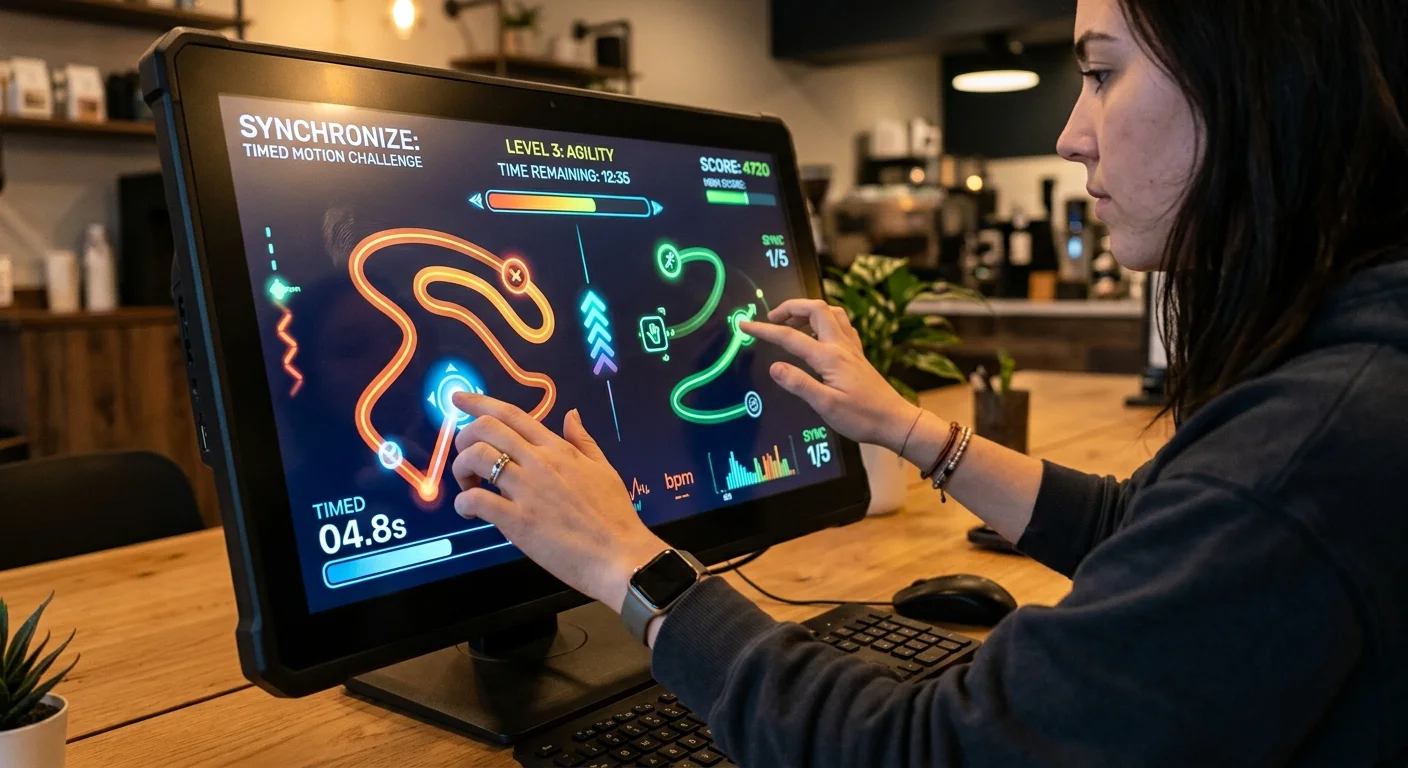
Once your foundational strength and reflexes have improved, coordination games become your best training tool. The beauty of game-based training is that it wraps repetitive practice inside an engaging challenge. Rhythm games that require timed taps, pattern-matching puzzles, and motion-tracking challenges all qualify. The key is choosing games that push you slightly beyond your current comfort zone without being so hard that you get frustrated and quit.
Hand Play AI Agent, for example, offers guided gameplay that scales with your skill level. You practice specific moves, follow visual prompts, and receive real-time feedback on accuracy and timing. This kind of structured challenge is more effective than unstructured play because it targets weak spots. Think of it like the difference between shooting hoops randomly and running a coach-designed basketball drill. Both involve the same motion, but one produces faster improvement.
Tracking Your Progress
Measurement turns training from a vague hope into a real program. Track at least three metrics: reaction time (using a ruler or app), tapping speed (how many clean taps in 30 seconds), and accuracy percentage in whatever coordination games you play. Record these weekly. Most people see measurable gains in hand coordination within the first two to three weeks of consistent practice, with continued improvement plateauing around the eight-week mark before requiring new challenges.
Don't underestimate the motivational power of a simple spreadsheet or notebook. When you can see that your tapping speed went from 48 taps per 30 seconds to 67, or that your game accuracy climbed from 72% to 89%, the data itself becomes a reward. This feedback loop is what separates people who train for two weeks and stop from those who build lasting, genuinely improved finger dexterity training habits that carry into gaming, work, and everyday life.
Avoid training through pain or numbness. Tingling in fingers during exercises can signal nerve compression. Take a full rest day and consult a professional if symptoms persist.
Frequently Asked Questions
?How long should I do finger-to-thumb touches before moving on?
?Can coordination games replace the isolation drills entirely?
?How long before I see real hand coordination improvements?
?Is skipping the warm-up okay if my hands already feel loose?
Final Thoughts
Improving hand coordination is not a mystery or a talent you either have or don't. It's a trainable skill that responds predictably to focused effort.
Start with warm-ups, build finger isolation strength, sharpen your reflexes, and then challenge yourself with progressively harder coordination games. Ten minutes a day will get you further than you expect. Your hands are capable of remarkable precision; they just need the right practice to unlock it.
Disclaimer: Portions of this content may have been generated using AI tools to enhance clarity and brevity. While reviewed by a human, independent verification is encouraged.