Motion coordination is one of those skills that affects nearly everything you do with your hands, from typing on a keyboard to catching a ball.
Whether you're five years old learning to tie your shoes or seventy years old maintaining dexterity, exercises that target hand motion can make a real difference. The good news is you don't need expensive equipment or a gym membership to start. Simple, guided movements practiced regularly can sharpen reflexes, improve finger independence, and build the kind of fluid hand control that translates to gaming, music, daily tasks, and overall well-being.
This guide breaks the process into four practical steps anyone can follow, regardless of age or experience level. Understanding what hand motion gaming is and how it works can also give you context for why these exercises matter in interactive digital environments.
Key Takeaways
- Motion coordination exercises work for children, adults, and seniors with simple modifications.
- Warm-up routines prevent injury and prepare your hands for more complex movements.
- Finger isolation drills build independence that directly improves gaming and typing speed.
- Tracking your progress weekly keeps you motivated and reveals measurable improvement.
- Consistency matters more than intensity; ten minutes daily beats one long weekly session.
Step 1: Assess Your Baseline and Set Age-Appropriate Goals
Before you start any exercise program, you need to know where you stand. A baseline assessment tells you how fast, accurate, and coordinated your hand movements currently are. This isn't about judgment; it's about measurement. You can't improve what you don't measure, and even a rough starting point gives you something to compare against in two or four weeks. Take five minutes to run through a few simple tests so you have honest data to work with.
Baseline Tests You Can Do Right Now
Try the coin flip test: place a coin on a flat surface, pick it up with your thumb and index finger, flip it over, and set it back down. Repeat this ten times with each hand and time yourself. Next, try the finger-to-thumb sequence: touch each fingertip to your thumb as fast as you can, going forward and backward. Count how many full cycles you complete in thirty seconds. These two tests cover pinch grip speed and finger sequencing ability.
Goal-setting looks different depending on your age. A child under ten might aim to complete three finger-sequencing cycles in thirty seconds, while a teenager could target eight. Adults recovering from repetitive strain might focus on pain-free range of motion first. Seniors should prioritize maintaining current abilities and preventing decline. Write your numbers down, because you will revisit them. If you want structured practice right away, you can improve hand coordination with targeted exercises designed to address specific weaknesses.
Setting realistic expectations prevents frustration. Research shows that motor skill improvements are often noticeable within two to three weeks of consistent practice, but meaningful gains in speed and accuracy can take six to eight weeks. Don't compare your progress to someone else's. Age, prior injuries, and natural aptitude all play a role. What matters is your personal trajectory, moving forward from wherever you started.
Record a short video of your baseline tests so you can visually compare your form later.
Step 2: Start With Warm-Up Routines That Prevent Injury
Skipping warm-ups is the fastest way to develop tendon pain or strain. Your hands contain 27 bones, over 30 muscles, and more than 100 ligaments and tendons. Cold tissue is stiff tissue, and stiff tissue doesn't coordinate well. A good warm-up takes just three to five minutes and makes every subsequent exercise more effective. Think of it as priming the system before asking it to perform.
Dynamic Stretches for Every Age Group
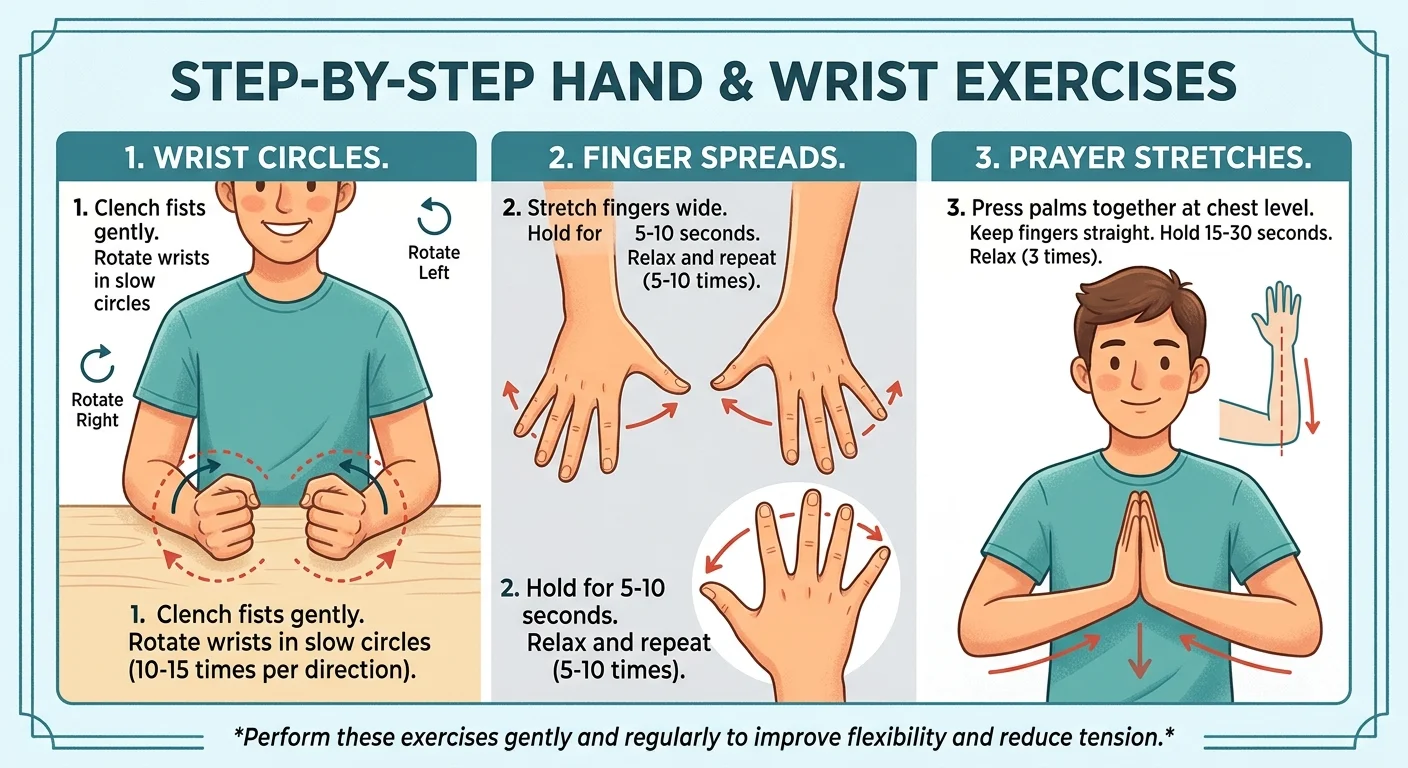
Start with wrist circles: extend both arms in front of you and rotate your wrists slowly, ten times clockwise and ten times counterclockwise. Follow with finger spreads, where you open your fingers as wide as possible, hold for two seconds, then make a tight fist. Repeat this ten times. These two movements increase blood flow to the fingers, wrists, and forearms. They're safe for children, adults, and seniors alike.
Next, add prayer stretches. Press your palms together in front of your chest with fingers pointing upward, then slowly lower your hands while keeping your palms pressed together until you feel a gentle stretch in your forearms. Hold for fifteen seconds. For seniors or anyone with arthritis, reduce the range of motion and never push into pain. Children can make this playful by pretending they're pressing against an invisible wall. The stretch targets the flexor tendons that control finger curling.
If you feel sharp pain, numbness, or tingling during any warm-up, stop immediately and consult a healthcare professional.
Finally, shake it out. Let your hands hang loosely at your sides and shake them gently for fifteen to twenty seconds. This resets muscle tension and signals your nervous system that it's time to move. Warm-ups should feel comfortable, almost boring. If they're difficult, they're probably too intense. Once you finish these stretches, your hands are ready for the real work. You can also explore reflex improvement exercises you can do at home as part of your pre-practice routine.
Step 3: Practice Core Motion Coordination Exercises
This is where real improvement happens. Motion coordination exercises train your brain and hands to work together with precision, speed, and timing. The exercises below are organized by difficulty so you can start where it feels right and progress naturally. Each one targets a specific aspect of hand control, from finger independence to bilateral coordination. Aim to spend at least ten minutes per session on these drills.
Beginner Drills
The table tap drill is perfect for beginners of all ages. Place both hands flat on a table and lift each finger individually, tapping it back down before moving to the next. Go from pinky to thumb on both hands simultaneously. This forces your brain to isolate individual finger movements, which is harder than most people expect. Start slowly and prioritize accuracy over speed. Three sets of five full cycles is a solid starting point for your first week.
Rubber band resistance training adds a strength component. Wrap a standard rubber band around all five fingertips, then spread your fingers apart against the resistance. Hold the spread for three seconds, then relax. This builds the extensor muscles that are often neglected in daily life, since we grip far more than we spread. Children find this exercise fun because it feels like a mini workout. Do two sets of fifteen repetitions on each hand.
"The hands that practice ten minutes daily will always outperform those that practice an hour once a week."
Intermediate and Advanced Progressions
Once basic drills feel easy, move to cross-body coordination exercises. The mirror writing drill asks you to write the same word simultaneously with both hands, but one hand writes it normally while the other writes it in reverse. This bilateral challenge fires up neural pathways that govern motion coordination across both hemispheres of the brain. Start with simple words like "cat" or "hand" and work up to longer phrases. Five minutes of this drill can feel surprisingly exhausting.
For gamers and tech enthusiasts, rapid alternation exercises mimic the demands of fast-paced gameplay. Tap your index and middle fingers alternately on a surface as fast as you can for twenty seconds, then switch to ring and pinky fingers. Track your tap count each session. Playing hand coordination games that boost reflexes can also serve as an engaging way to practice these patterns in a game-based format, making the work feel less like a chore.
Advanced practitioners can try the pen spin drill, rolling a pen across all four fingers without using the thumb to stabilize it. This demands exceptional finger independence and proprioceptive awareness. It takes most people several weeks to master a single smooth roll. Don't get discouraged if the pen flies across the room at first. That's normal. The skill builds gradually as your brain maps the movement pattern more precisely with each attempt.
If you have carpal tunnel syndrome or a similar condition, skip the rapid alternation and pen spin drills until cleared by a doctor.
Step 4: Track Your Progress and Level Up
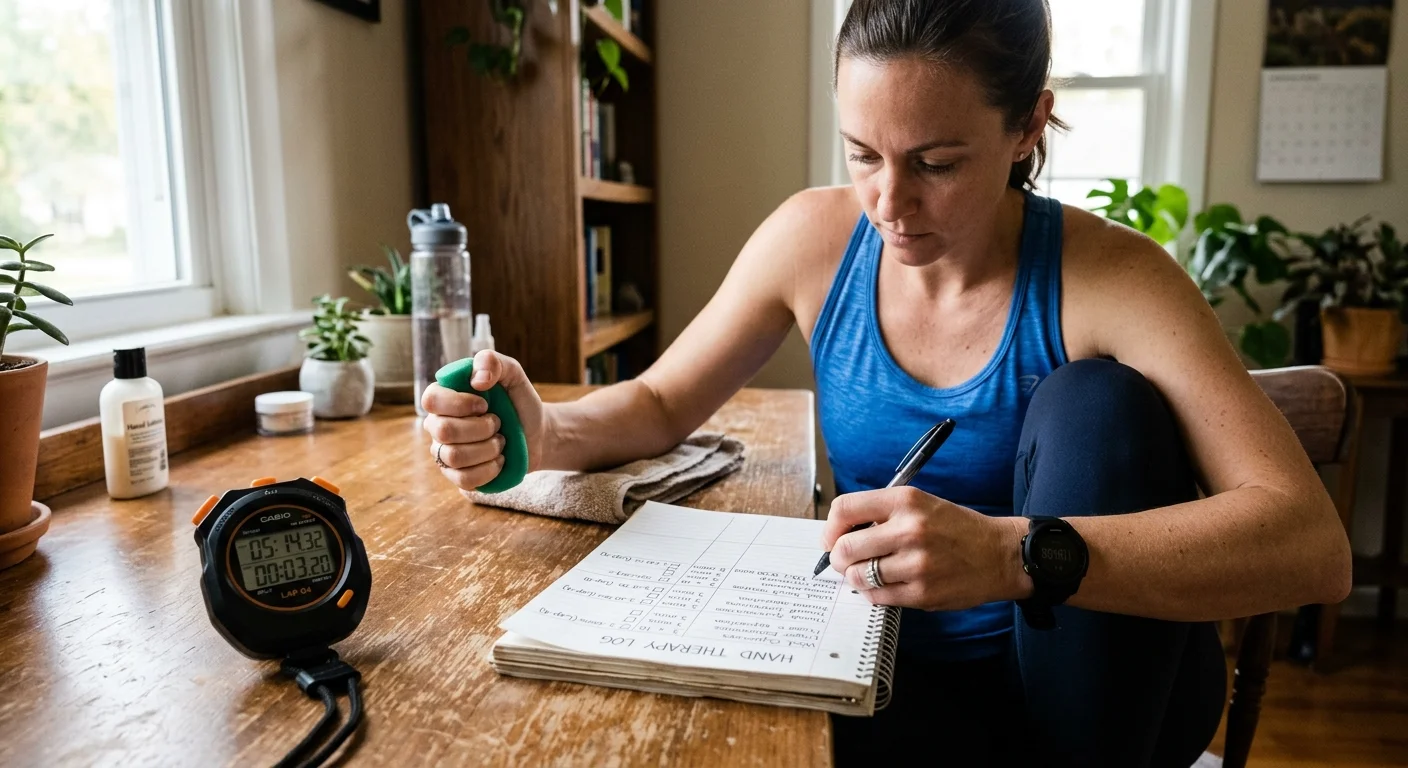
Tracking is what separates people who improve from people who plateau. Without a record of your performance, you're relying on feelings, and feelings are unreliable when it comes to gradual skill development. A simple log takes thirty seconds to fill out after each session and gives you powerful feedback over time. You don't need an app (though they can help). A notebook works perfectly well.
Also Check: How Automated Workflows Improve Team Collaboration
A Simple Weekly Tracking Method
Every Sunday, rerun your baseline tests: the coin flip test and the finger-to-thumb sequence. Write down your times and cycle counts. After four weeks, you should see measurable improvement if you've been consistent. Most people see a 15 to 25 percent improvement in finger sequencing speed within the first month. Coin flip times often improve by two to four seconds over the same period. These numbers give you concrete evidence that the work is paying off.
| Week | Coin Flip Time (10 reps) | Finger Sequences (30 sec) | Self-Rated Difficulty (1-10) |
|---|---|---|---|
| Week 1 | 24 seconds | 4 cycles | 7 |
| Week 2 | 21 seconds | 5 cycles | 6 |
| Week 3 | 19 seconds | 6 cycles | 5 |
| Week 4 | 17 seconds | 7 cycles | 4 |
When the exercises start to feel too easy, that's your signal to level up. Add resistance, increase speed targets, or introduce a new drill. The principle of progressive overload applies to hand training just as it does to weight lifting. Your muscles and neural pathways adapt to the current demand, so you must increase that demand to keep improving. A good rule of thumb: if you can complete a drill at 90 percent accuracy for three consecutive sessions, it's time to make it harder.
Beyond physical metrics, notice qualitative changes in your daily life. Are you typing faster? Fumbling your phone less? Performing better in games that require quick hand responses? These real-world outcomes are the whole point. The skills you develop through structured motion coordination training don't stay in the practice session; they follow you into everything your hands do. Some people also find unexpected benefits in areas like handling high-pressure situations with greater composure, since improved hand control can reduce physical tension during stressful moments.
Pair your hand exercises with a consistent trigger, like doing them right after your morning coffee, to build the habit faster.
Frequently Asked Questions
?How do I use the coin flip test to track weekly progress?
?Is daily 10-minute practice really better than one long weekly session?
?Do I need any equipment beyond a coin to start these exercises?
?Can skipping the warm-up routine really cause tendon pain?
Final Thoughts
Hand motion coordination exercises are accessible, effective, and adaptable to any age or skill level.
The four steps in this guide, assessing your baseline, warming up properly, practicing targeted drills, and tracking results, form a complete system you can start today. Ten minutes of daily practice adds up fast, and the improvements transfer to gaming, work, music, and everyday tasks. Your hands are your most versatile tools.
Train them well, and they'll reward you with speed, precision, and confidence you can feel in every movement.
Disclaimer: Portions of this content may have been generated using AI tools to enhance clarity and brevity. While reviewed by a human, independent verification is encouraged.